Listen: Accordion in performance
A glimpse of Mirco Lieber performing J. S. Bach's English Suite No. 5 on accordion — more of the repertoire (Bach, folk, tango, and original arrangements) lives on his concert site.
Why study accordion with Mirco Lieber?
Mirco Lieber holds a MMag. from MDW University for Music and Performing Arts Vienna and the Academy of Music Ljubljana, with a specialisation in concert accordion, harpsichord, organ, and piano — and over 30 years of teaching experience.
Chord theory and left-hand voicing transfer directly from piano, which makes accordion a natural next step for keyboard players — while bellows control brings an entirely new expressive dimension. Lessons are shaped around your instrument, your goals, and the repertoire you want to play.
What's included
- 1-on-1 live coaching via Zoom, tailored to your instrument and repertoire goals
- Bellows technique, control, and dynamics
- Treble and bass button layout guidance
- Chord theory and left-hand voicing, building directly on piano knowledge where relevant
- Repertoire spanning Austrian and Central European folk, musette, and Argentine tango
- Session recordings and practice notes after every lesson
What makes the accordion unique
Unlike the piano, where a struck key's volume is fixed at the moment of contact, an accordion's volume and tone come from bellows pressure applied continuously while a note is held — closer to how a singer or wind player sustains and shapes a phrase with breath. This makes the accordion one of the few keyboard-adjacent instruments where genuine crescendo and diminuendo are possible on a single sustained note, entirely independent of which keys or buttons are pressed.
The left hand adds its own layer of complexity: the Stradella bass system arranges buttons in concentric rows of single bass notes and pre-set major, minor, seventh, and diminished chords, so a pianist's chord-theory knowledge transfers directly — but the physical layout (button rows rather than a keyboard) and the need to coordinate bellows direction with both hands take real practice to feel natural. On piano-accordion models the right hand plays a familiar piano keyboard; on button (chromatic) accordions it plays rows of buttons in a completely different layout, which is a separate choice students make early on.
Topics covered
- Bellows control — shaping dynamics and phrasing through continuous air pressure
- Stradella bass system — single bass notes plus pre-set chord buttons for the left hand
- Piano vs. button (chromatic) accordion — choosing and adapting to a keyboard layout
- Coordinating bellows direction with both hands — push/pull technique without breaking phrasing
- Folk and tango idioms — ornamentation and rhythmic style specific to the repertoire
Frequently asked questions
Can I learn accordion online?
Yes — Mirco Lieber, a Vienna-trained concert accordionist (MMag., MDW University Vienna and the Academy of Music Ljubljana), teaches accordion entirely online through 1-on-1 live coaching via Zoom. Because bellows technique and Stradella bass fingerings are primarily visual and postural skills, a webcam angled to show both hands and the bellows in motion works well for real-time correction — just as it would in person. Lessons cover bellows technique and dynamics, treble and bass button layouts, chord theory, and repertoire spanning Austrian and Central European folk music, musette, and Argentine tango, all adapted to your specific instrument (piano or button accordion) and current level, from complete beginners to pianists transferring existing keyboard and chord knowledge. Every session is recorded and followed up with practice notes, so you can review bellows and fingering details at your own pace between lessons rather than relying on memory alone.
Do I already need to own an accordion to start?
It helps to have access to an accordion, but you don't need to own one before your first lesson. Many students begin by transferring chord theory and left-hand voicing they already know from piano — knowledge that carries over directly to the Stradella bass system — while working out the details of buying or renting an instrument in parallel. If you're still choosing one, Mirco Lieber will advise on a suitable model based on your goals: a piano accordion suits pianists who want a familiar right-hand keyboard, while a button (chromatic) accordion suits students drawn to folk or tango traditions that favor that layout. Early lessons can focus on bellows fundamentals, posture, and chord theory using whatever instrument is available — even a borrowed one — so progress doesn't have to wait until you've settled on and purchased your own accordion.
What repertoire is covered?
Repertoire is shaped around your own musical interests and spans several traditions. Core technique work covers bellows control and dynamics, treble and bass button layouts, and chord voicing on the Stradella bass system, applied directly to the pieces you want to play. On the folk and popular side, lessons draw on Austrian and Central European folk music, French-style musette, and Argentine tango, each with its own ornamentation and rhythmic phrasing that gets taught alongside the notes. For students interested in classical repertoire, Mirco Lieber also brings his experience performing Baroque works — including J. S. Bach's English Suite No. 5 — arranged for accordion, showing how the instrument's continuous bellows control can shape phrasing in music not originally written for it. Whatever direction you want to take, repertoire choices are adjusted lesson by lesson rather than following a fixed syllabus.
What's the difference between accordion and piano?
On piano, a key's volume is fixed the instant it's struck and can't change afterward — the sound simply decays. On accordion, volume and expression come from continuous bellows pressure, so a single held note can crescendo, diminuendo, or swell exactly like a singer's breath or a wind instrument's airstream — a kind of sustained expressive control piano's hammer-and-string mechanism can't produce at all. The left hand also works completely differently: instead of a mirrored keyboard, accordion uses the Stradella system, a grid of pre-set bass notes and full chords triggered by single buttons, which means left-hand technique has to be learned essentially from scratch even for experienced pianists. Despite these mechanical differences, music theory, sight-reading, and right-hand keyboard technique all transfer directly from piano, which is why pianists typically progress faster on accordion than complete beginners.
Should I choose a piano accordion or a button accordion?
Piano accordions have a familiar right-hand keyboard laid out exactly like a piano, which usually makes them the easier and faster starting point for pianists, since existing note-reading and fingering habits transfer with almost no adjustment. Button (chromatic) accordions replace that keyboard with a compact, row-based grid of buttons — a layout some folk and tango traditions favor for its speed and reach across octaves, and one that offers a different fingering logic once learned, often allowing faster passages and wider intervals than a piano keyboard permits in the same hand span. Neither is objectively better; the right choice depends on your background and goals. Pianists who want the shortest path from existing skills to playing accordion repertoire do best on a piano accordion, while students drawn specifically to folk, musette, or tango traditions may prefer starting on button accordion. Mirco Lieber can help you decide based on your experience, goals, and the repertoire you most want to play.
Coming Soon: Self-Paced Accordion Course, Level 1
1-on-1 coaching is available now (above). A self-paced Level 1 video course — in the same format as our piano courses — is currently in development. Planned curriculum:
- Bellows technique, control, and foundational dynamics
- Treble and bass button layouts from the ground up
- Chord theory and left-hand voicing, building on piano knowledge
- First pieces from Austrian folk music and tango
Slovenian Oberkrainer Music on Accordion
Oberkrainer music is my musical root — the style made world-famous by Slavko Avsenik, with its distinctive accordion-led harmonics, yodelling lines, and Carinthian folk rhythms. I have recorded 10 CDs and compilations with various instrumentations as accordionist, composer, arranger, and music producer in Slovenia and Austria, written around 70 of my own compositions and numerous arrangements for small and large ensembles, and received several awards at various festivals.
Oberkrainer harmony diverges sharply from classical Western music theory. I teach you how to interpret Oberkrainer music authentically — from the characteristic bass lines and bellows technique to ornamentation, phrasing, and the rhythmic drive that makes this style. Whether diatonic, chromatic, or piano accordion — you learn the idioms from the inside out.
Beyond individual accordion coaching, I also offer arranging services and compositions for bands and ensembles playing Oberkrainer music. I arrange existing pieces for your specific instrumentation — from solo accordion parts to full Oberkrainer band lineups with clarinet, trumpet, baritone, Steirische harmonika, and rhythm section. Original compositions in the Oberkrainer style for your band are also available. With over 70 original works, 10 CD productions, and decades of experience as a music producer, I know what works in this genre — on stage and in the studio.
More about my Oberkrainer music, recordings, and performances can be found on my personal website and YouTube channel:
Klavier und alle Tasteninstrumente übertragbar.">Want to learn Oberkrainer music yourself? Book a dedicated Oberkrainer coaching session — I will teach you the harmony, the characteristic bass lines, and the rhythm of this style, live 1-on-1 via Zoom. These chord progressions, improvisation techniques, and stylistics also transfer to piano and all keyboard instruments.
Early Music on Concert Accordion — Free Bass System
My specialisation is the interpretation of Early Music on the accordion — Bach, Scarlatti, Couperin, Frescobaldi, and the full Baroque repertoire. As a trained concert harpsichordist and organist with historical performance practice (MMag., MDW Vienna), I bring a perspective most accordionists don't have: I know how this music originally sounded and transfer that knowledge to the accordion — with historically informed articulation, ornamentation, phrasing, and registration.
The free bass system (Bajan/Free Bass) extends the accordion with a third manual level that I find particularly compelling as an early music interpreter on accordion: contrapuntal voices become independently playable, continuo realizations become faithful, and the timbres of organ and harpsichord literature become approachable — all on one instrument. Listen to my interpretation of Bach's English Suite No. 5 in the "Accordion in performance" section above.
Preludium derselben Suite, interpretiert auf dem Konzertakkordeon mit historisch informierter Artikulation und Phrasierung — der bedeutendste Satz der Suite:">Listen to the Courrante from Bach's English Suite No. 5 in the "Accordion in performance" section above. Here is another central example: the Prelude (Preludium) from the same suite, performed on concert accordion with historically informed articulation and phrasing — the most important movement of the suite:
More concert recordings and historically informed interpretations can be found on my channel:
▶️ youtube.com/@mirco.lieber — Concert Accordion & Early MusicLead Sheets, Chord Progressions & Improvisation — Open to Any Repertoire
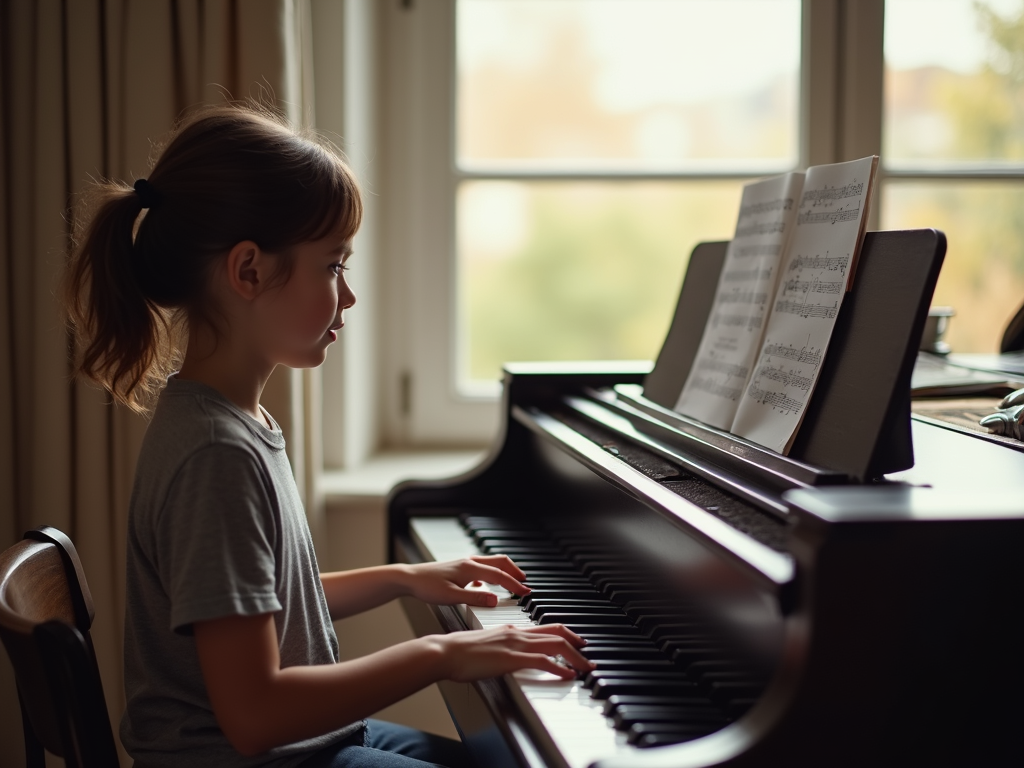
Reading lead sheets and Real Books, understanding chord progressions, and being able to improvise — this is the foundation of my teaching style, whether on accordion, piano, keyboard, or melodica. Blues, jazz, pop, film music, modern harmony, and classical: I am open to any repertoire you are passionate about. You learn to not just read music, but to shape it spontaneously — in the genre you love.
What you'll learn
- Reading and interpreting lead sheets & Real Books
- Understanding chord progressions and modern harmony
- Accompaniment patterns for pop, jazz, film music, Latin & folk
- Improvisation from the ground up — blues, modal, free
- Ear training and harmonic understanding
These skills — chord progressions, improvisation, and lead sheet work — are the core of my piano teaching, kids lessons, and 1-on-1 training for any keyboard instrument.
Ready to start?
Book a free 15-minute discovery call — no commitment, no pressure.
Book Your Discovery Call →