Learning Accordion at 50 Plus, A Realistic Guide for Late Starters
No talent myth, no age limit, a realistic guide for adults and retirees who want to start accordion, from a concert accordionist with over 30 years of teaching experience.
Book a Free Discovery Call →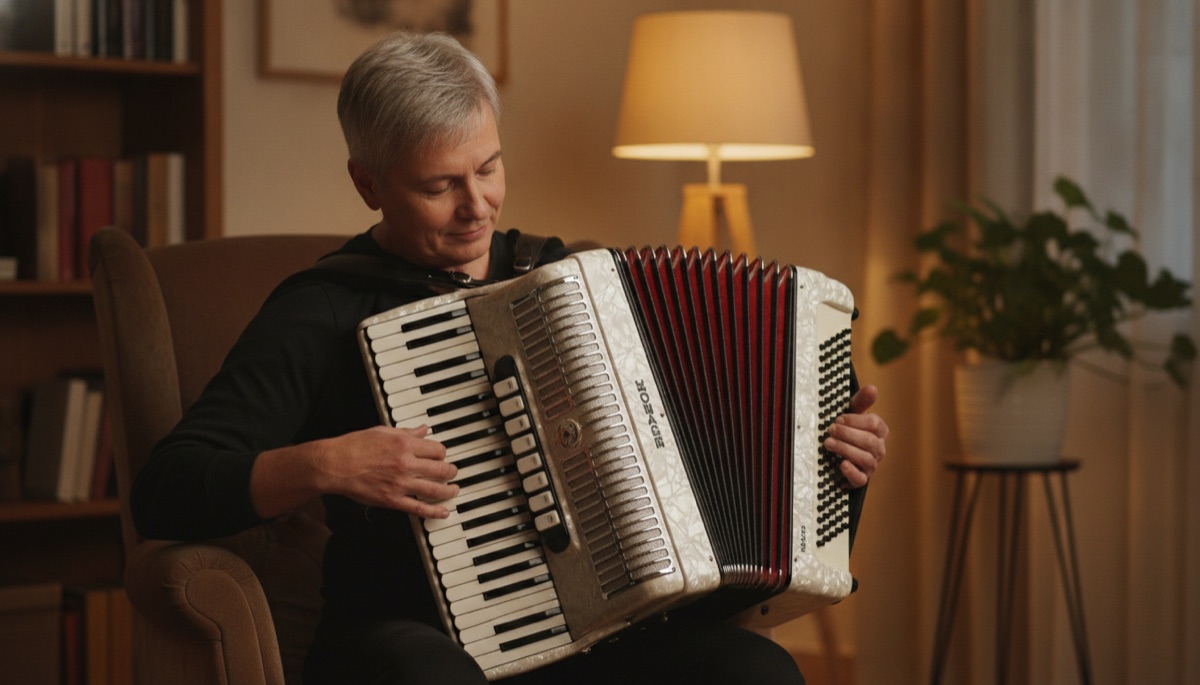
Why age is not the real obstacle
"Learn accordion at 50 plus" is one of the most common questions I hear from prospective adult students, and the honest answer is that age itself rarely stops anyone. What actually determines progress is structure: a clear starting point, a lighter instrument if needed, and short, consistent practice instead of long, irregular sessions. Adults and seniors who start accordion later in life often progress faster in the first weeks than younger beginners, because they read instructions carefully, understand theory conceptually, and practise with intention rather than needing constant supervision.
What genuinely takes longer to settle in is finger independence and bellows control, the physical coordination between both hands and the arm. That is a question of practice time, not age, and it responds well to short, focused daily sessions.
Choosing the right accordion as a late starter
Instrument weight and bass system
- A lighter piano accordion with 72 or 96 basses is often a better starting point than a full 120-bass concert instrument, it reduces the load on shoulders and back without limiting what a beginner can play.
- If you already play piano or keyboard, the treble side (right hand) will feel immediately familiar, the keyboard layout is identical.
- The bass side (left hand) uses the Stradella system, pre-built chord buttons rather than individual notes, which makes accompaniment genuinely learnable through a fingering chart even before you can read music.
- Renting or borrowing an instrument first is a sensible way to test fit and weight before committing to a purchase, especially with existing joint or shoulder concerns.
A realistic first 90 days
Days 1 to 30: Posture, bellows, and first sounds
- Correct posture, strap adjustment, and relaxed bellows control, the habits hardest to fix once they have set in
- Right-hand note names, since the piano-style keyboard is identical to piano and keyboard
- First simple melodies played with the right hand alone
- Basic bass-and-chord buttons on the left hand, read directly from a fingering chart
Days 31 to 60: Both hands together
- Coordinating melody in the right hand with simple bass-chord accompaniment in the left
- Smooth bellows changes without interrupting the musical line
- The three or four most common chord patterns in one key, and how to move between them
Days 61 to 90: One complete piece
- Building one full piece with melody and accompaniment together, not just exercises
- Dynamics through bellows pressure, the expressive element unique to accordion
- A piece worth playing for family or friends, the moment practice starts feeling like music
Common concerns adult and senior beginners raise
- "My fingers aren't as fast anymore", speed is the last skill developed, not the first. Early accordion playing is about accuracy and relaxed technique, which do not depend on youth.
- "I've never played an instrument before", that is the normal starting point for most adult students, not a disadvantage. A good plan assumes zero prior knowledge.
- "I'm worried about my shoulders or back", a lighter instrument, correct strap setup, and short practice sessions with breaks address this directly, and are worth discussing with a teacher before the first lesson.
- "I don't want to feel embarrassed as a beginner", 1-on-1 lessons mean there is no classroom, no comparison to other students, and no pace but your own.
Frequently asked questions
Is it too late to start accordion at 50 or 60?
No. Adult and older beginners learn an instrument differently from children, not worse, they grasp structure and theory immediately, practise with more intention, and need no supervision. What takes longer is pure finger and bellows-arm mobility settling in, which is a matter of practice time, not age. Many of my adult students start after retirement and show visible progress within the first months.
Which accordion is right for a beginner over 50?
Most late starters do well with a lighter piano accordion at 72 or 96 basses rather than a full 120-bass concert instrument, this significantly reduces the weight on the upper body without limiting what a beginner can musically achieve. Anyone who already plays piano or keyboard will find the treble side immediately familiar, since the keyboard layout is identical. With joint issues or limited upper-body strength, it is worth trying an instrument in person or starting with a rented or used accordion before buying.
How much should I practise daily as a late starter?
15 to 20 focused minutes a day are more effective than one long session a week, especially on accordion, where bellows control and finger coordination need repetition in small, regular doses to settle in. Short breaks between practice segments also protect the hands and shoulders, which matters especially for late starters.
Do I need to read music to start?
No. Most adult beginners start with letter-name notation or a simple fingering chart for the bass side and pick up note reading gradually alongside real playing, rather than needing to master it beforehand. The bass area of the accordion, the Stradella system of pre-built chord buttons, is also structured so that many accompaniment patterns can be learned purely from a fingering chart, even without classical note reading.
Are health limitations an obstacle?
In most cases, not with the right adjustments. A lighter instrument, short practice sessions with breaks, and deliberate bellows technique instead of raw strength resolve most concerns around shoulders, back, or wrists. With existing conditions, it is worth discussing posture and strap setup with the teacher before the course starts, so both are set correctly from the first lesson, something that can be observed and corrected directly in live 1-on-1 lessons.
Can I learn online without someone watching in person?
Yes, in live video lessons, the teacher sees hand position, bellows control, and posture in real time via camera and can correct habits before they set in, the key difference from pre-recorded tutorials or apps, which cannot hear or see what is actually happening. Camera angle and instrument setup are established in the first session, after which correction works essentially the same as in-person teaching.
Ready to start, at your own pace?
Book a free 15-minute discovery call, no commitment, no pressure. We'll talk about your goals, your instrument, and what a realistic first plan looks like for you.
Book Your Free Call →