How to Learn Piano as an Adult, A Realistic 90-Day Plan
No talent myths, no unrealistic promises, just a structured, honest plan for adult beginners, from a concert musician with 30+ years of teaching experience.
By Mirco Lieber, MMag. · Concert musician, 30+ years teaching · Updated August 2026
Get the Free Starter Course →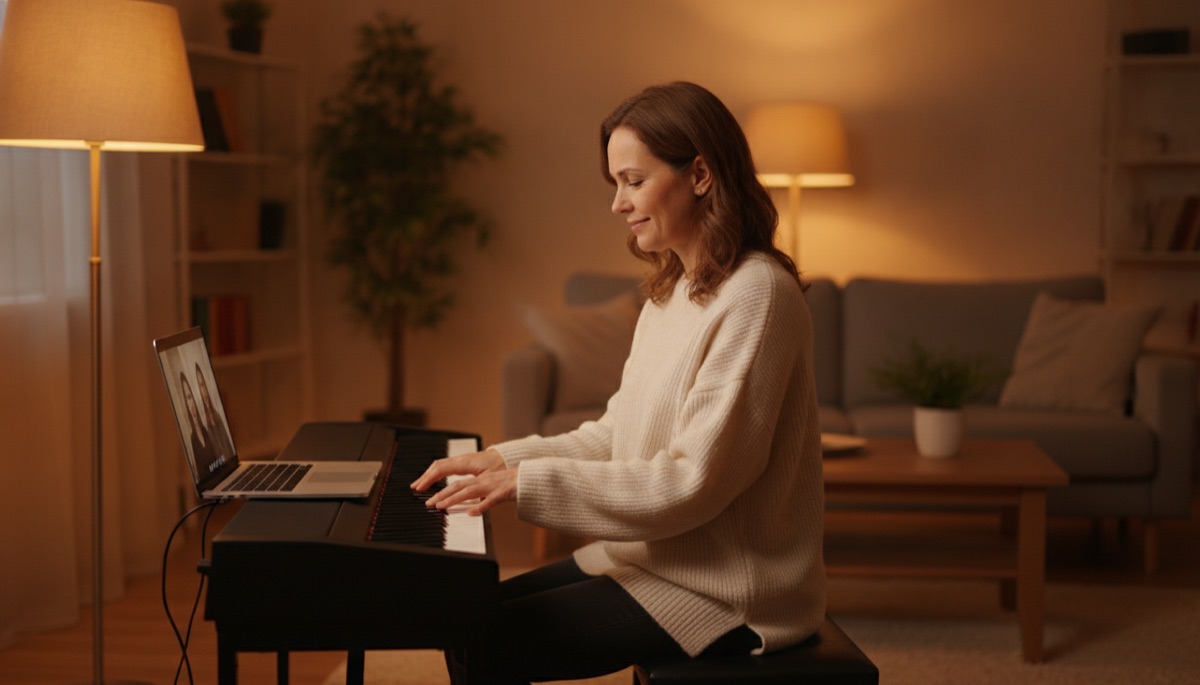
Why do most adults start piano the wrong way?
Most adult beginners don't fail because of talent, they fail because of structure. They download an app, practise inconsistently for two weeks, lose track of what comes next, and quit. The problem is rarely ability, it's the absence of a clear path with genuinely achievable milestones. A realistic plan solves exactly that: concrete targets for Day 1, Day 30, Day 60, and Day 90, so you always know what you're working on and why.
This plan is built from over 30 years of teaching experience with adult beginners, not a generic app template. It's deliberately modest about what it promises, and honest about what daily practice actually requires.
The 90-day framework
Days 1 to 30: Foundations
- Posture, hand position, and relaxed touch, the habits that are hardest to fix once they've set in
- Note names and simple right-hand note reading
- First simple one-hand melodies, played cleanly and in time
- Basic rhythm work, feeling quarter and eighth notes, not just counting them
Days 31 to 60: Two hands, real chords
- The left hand joins in, simple bass notes and first chord patterns
- The three core chords in one key (e.g. C, F, and G major) and how to move between them
- Both hands together in simple coordination exercises, the point where piano finally starts feeling like piano
- First short accompaniment patterns behind a simple melody
Days 61 to 90: One real song, start to finish
- Building one complete piece with both hands together, not just exercises
- Smooth transitions between chords without losing the beat
- Dynamics and expression, playing softer and louder with intention, not by accident
- A piece you actually want to perform, the moment practice starts feeling like music
What "realistic" actually means
15-20 focused minutes a day beats 2 hours once a week. Consistency builds the muscle memory and note-reading fluency that make progress feel real; long, infrequent sessions mostly just relearn what was forgotten since last time. After 90 days at this pace, one complete two-hand song is an appropriate, achievable target, not a concert repertoire, but a real, felt result.
Common mistakes adult beginners make
- Reaching for pieces that are too hard too soon, before the fundamentals are solid
- Only ever looking at the sheet music, never the hands, position quietly deteriorates unnoticed
- Practising in long, infrequent blocks instead of short, daily sessions
- Comparing progress to other beginners or online videos instead of tracking your own
Frequently asked questions
Am I too old to learn piano?
No. Adult students routinely make faster early progress than children because they can read, understand theory conceptually, and practise with intention rather than needing constant supervision. Motor coordination takes a bit longer to settle in than it does for a child, but there is no age at which learning piano becomes impossible, only ages at which people wrongly assume it is.
How much should I practice each day?
15-20 focused minutes a day beats 2 hours once a week. Consistency builds the muscle memory and note-reading fluency that make progress feel real; long, infrequent sessions mostly just relearn what was forgotten since last time. If you can only manage 10 minutes some days, that is still enough to keep the habit alive.
Do I need to read sheet music to start?
No. Most adult beginners start with letter-name notation or simplified chord charts and pick up standard notation gradually alongside real playing, rather than treating note-reading as a prerequisite. By the end of a structured 90-day plan, reading simple melodies becomes natural because it has been built in gradually, not front-loaded as theory.
What if I have no musical background at all?
That is the normal starting point for most adult students, not a disadvantage. A good structured plan assumes zero prior knowledge and builds every concept, rhythm, note names, hand independence, from first principles. Prior musical experience helps with pacing, but its absence does not block progress.
Can I really learn without a teacher watching my hands in person?
Yes, with the right format. Live video lessons let a teacher see hand position, posture, and finger technique in real time and correct habits before they set in, the main advantage over a purely app-based approach, which cannot hear or see what you are actually doing. Camera angle and instrument setup are worth getting right in the first session, after which correction works essentially the same as in person.
Ready to start the plan?
The free 5-day piano starter course is Day 1 of this plan, free, no card needed.
Start the Free Course →Beyond folk & classical
Mirco also teaches jazz, pop, accompaniment & improvisation on piano - structured, didactic and tailored to your goals. Whether you want to comp from lead sheets, build solo arrangements or develop a systematic harmonic vocabulary, the same methodical clarity applies: clear steps, solid technique, musical understanding.