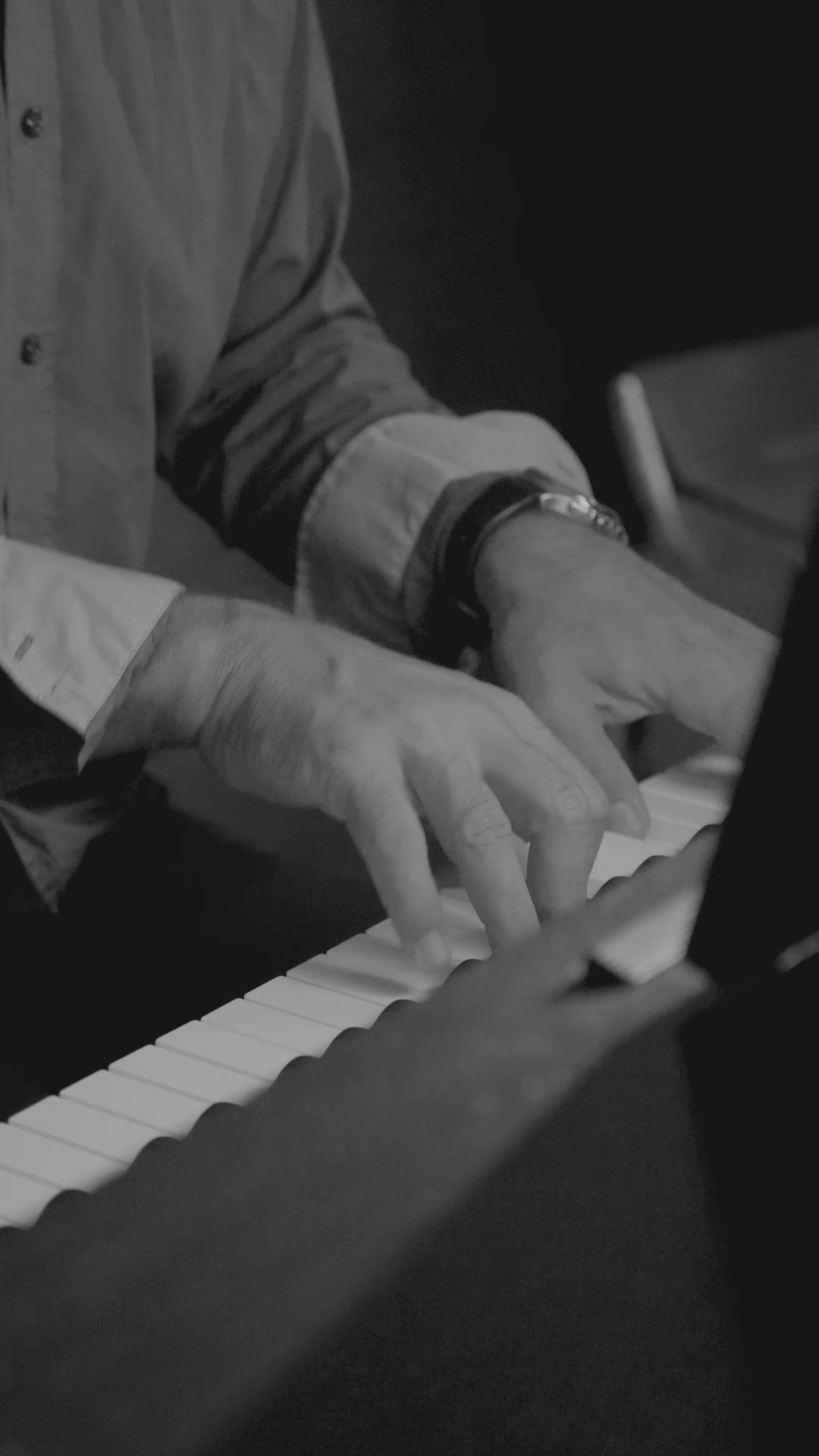
Can you really learn piano without reading sheet music? The short answer: yes. I have taught for over 30 years, and I estimate that more than half of my adult students never wanted to read music, yet today they play songs, accompany themselves while singing, and have found a hobby they love. They simply learned differently: with chords, by ear, and by understanding the keyboard instead of notation.
This guide shows you how piano playing without sheet music works, which method leads to a first song fastest, and when (maybe) you will still need notation.
Learn Piano Without Sheet Music: The Honest Answer
Most people assume learning piano begins with reading music. That is a misunderstanding. Learning piano begins with three things: the layout of the keyboard, the coordination of your hands, and understanding how music is built. Notation is just one way of writing music down, not the music itself.
Chord-based playing replaces notation with a system that opens up countless songs: you learn the essential chords (C major, G major, A minor, F major), a left-hand accompaniment pattern, and the melody by ear or from simple chord charts. With that you can play pop songs, folk songs, Christmas carols, and simple accompaniments.
| Learning path | With notation | Without notation (chords + ear) |
|---|---|---|
| Start | Reading music + fundamentals | Keyboard + first chords |
| Time to first song | 6 to 12 months | 4 to 8 weeks |
| Best for | Classical, demanding repertoire | Pop, rock, gospel, song accompaniment |
| Prerequisites | Reading notes and rhythm | None |
| Notation needed later? | No | Only for ambitious classical playing |
The 4 Building Blocks of Playing Piano Without Notes
To play without notation you do not need notes, but you do need a clear structure. These four building blocks replace notation:
1. Understand the keyboard layout
The white and black keys follow a fixed pattern that repeats every twelve notes. Once you know the landmarks (the groups of two and three black keys), you can find any note instantly. This is the first step and takes only a few hours.
2. The most important chords
With four to six chords (C major, G major, A minor, F major, D minor, E major) you can accompany the majority of pop and folk songs. Chords are the "alphabet" of song accompaniment, they open up thousands of songs without reading a single note.
3. Left-hand accompaniment patterns
The left hand plays simple patterns (such as root-fifth patterns or broken chords) to accompany. These patterns combine and make your accompaniment musical instead of just grasping chords.
4. Playing by ear
Ear training is not an innate gift; it is a trainable skill. You learn to recognize intervals, find melodies, and hear chord changes. Just a few minutes a day noticeably improves your ear, and makes you independent of any sheet music.
What really matters: technique and posture
Regardless of notation: play piano with relaxed hands. A common trap when self-learning without notes is hitting the "right keys" while tension creeps into the wrist or shoulder. That is why, especially without notation, occasional feedback matters. A teacher sees in real time if your wrist collapses or your fingers buckle, and corrects it immediately. Neither an app nor a YouTube video can do that.
"I never wanted to learn notation, I just wanted to play songs. After six weeks of a chord course I accompanied the first song at a family gathering. A year later I started learning a little notation anyway, out of curiosity, not obligation."
When do you actually need notation?
Honestly: for pop, rock, gospel, folk and Christmas songs, and simple classical arrangements, chord playing is entirely sufficient. Reading notation only becomes important when you want to play demanding classical repertoire, sonatas, concert pieces, or precise interpretations where every note is specified.
The good news: once you play with chords and by ear, learning notation later is much easier. You already know the music, you only learn how to write it down.
Piano, keyboard, organ, accordion, without notation?
The chord principle works on every keyboard instrument. On piano and digital keyboard the entry is most direct. Organ, accordion, harpsichord, and melodica can also be learned through chords and by ear, the keyboard structures are similar, and the accompaniment patterns transfer. If you switch instruments later, you take your chord knowledge with you.
The best first steps (doable today)
- Name your fingers' landmarks: find the groups of two and three black keys and all the C positions on the keyboard.
- Learn four chords: C major, G major, A minor, F major, grasp them in the left hand and switch smoothly.
- Find a song by ear: take a simple children's song (like "Twinkle Twinkle Little Star") and find the melody on the piano.
- Choose structure over random videos: a progressive course saves you the frustration of hopping from one YouTube video to the next.
Play your first song in 5 days
Try the free 5-day piano starter course, no notation, no credit card. See within days whether structured online learning suits you.
Start free →Frequently asked questions
Can you really learn piano without reading sheet music?
Yes. Instead of notation, you learn chord symbols, the keyboard layout, rhythm, and playing by ear. With these skills you can play and accompany countless songs.
How long does it take to play a first song without sheet music?
With a structured chord course and regular practice, most adult beginners play their first complete two-handed song after 4 to 8 weeks.
What is the difference between playing from notation and from chords?
Playing from notation reproduces the exact written melody and accompaniment. Playing from chords uses a pattern plus the melody by ear. Chord playing is faster to learn and ideal for song accompaniment.
Do you eventually have to learn notation?
Not necessarily. For pop, rock, gospel, and simple classical arrangements, chord playing is enough. Reading notation only becomes necessary for demanding classical repertoire.
Which instruments can you learn without sheet music?
Piano, digital keyboard, organ, accordion, harpsichord, and melodica can all be learned through chords and by ear. The entry point is similar across all keyboard instruments.
Learn Piano Without Sheet Music in the USA
US learners can absolutely learn piano without sheet music. Live 1-on-1 online coaching teaches chords, lead sheets and improvisation - popular with adult beginners from New York to Los Angeles.