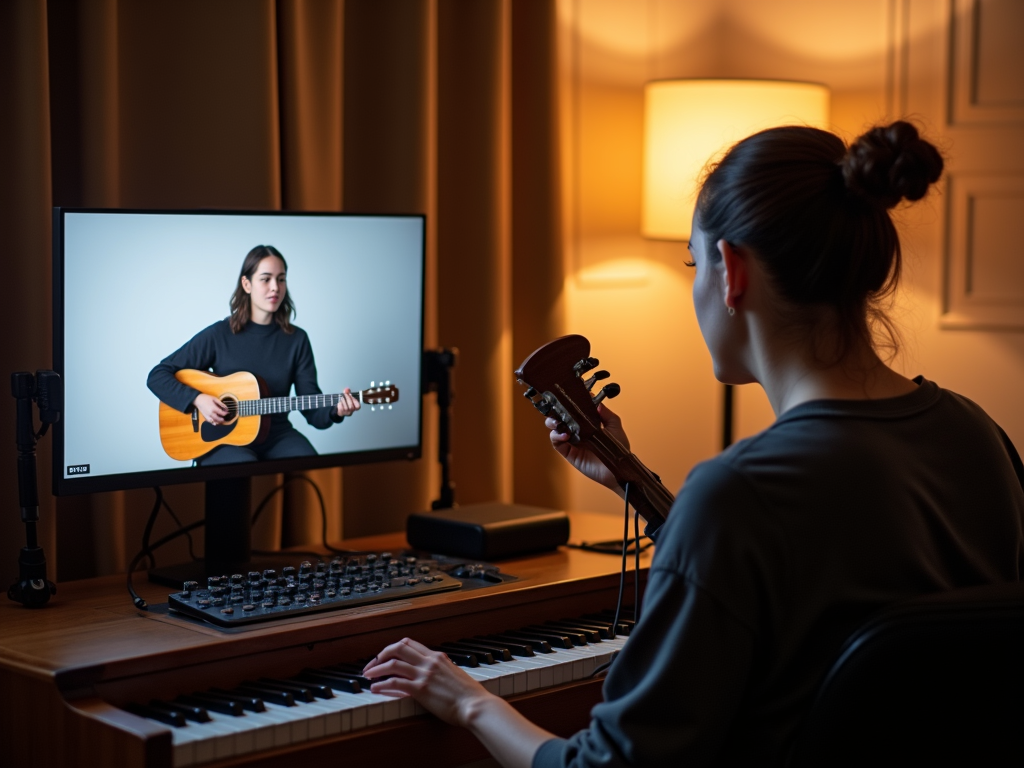
The best online piano lessons for adults aren't the most popular ones — they're the ones that actually keep you playing after the first month. With hundreds of apps, courses, and coaches competing for your attention, the market is louder than ever. But most of those options are designed for children or casual dabblers, not for adults who want real progress.
Over 30 years of teaching, I've seen exactly which methods work for adult beginners and which ones burn through your time and money. Here's how to find an online piano course for adults that delivers lasting results.
What Makes a Piano Course Suit Adults Specifically?
Children learn piano through repetition and external structure — a parent schedules practice, a teacher assigns the same exercise for a week, progress is measured in exams. Adults learn differently. You bring life experience, a busy schedule, and a clear idea of what you want to play.
An online piano course for adults needs to match that reality. The best options share three characteristics:
- Flexible pacing. You shouldn't wait a week for the next lesson because you moved faster through a section. Neither should you feel rushed when work or family eats into practice time. Self-paced access to the full curriculum matters.
- Real music first. Adults lose motivation playing "Mary Had a Little Lamb" for three weeks. The best courses get you playing something you'd actually listen to — simplified arrangements of real songs — from the first sessions.
- Clear structure with visible progress. You need to know where you're heading. A good course lays out exactly which skill you'll develop in week 1, week 4, week 8, and beyond. No guesswork, no wandering.
Comparison: Apps vs. Video Courses vs. Live Coaching
Every adult who wants to learn piano online eventually faces the same fork in the road. Here's how the three main paths compare:
Piano Apps (Simply Piano, flowkey, Skoove)
Apps are the cheapest entry point, usually €100–200 per year. They're excellent for building note-reading fluency through gamified feedback — the app listens via microphone and tells you if you hit the right note. The big limitation is that no app can see your hands. It cannot tell you that your wrist is collapsed, your fingers are flattening, or your shoulders are tight. Those physical habits determine whether you plateau at week 6 or keep improving for years. Apps work best as a supplement, not a primary learning method.
Self-Paced Video Courses
A well-produced video course (like ML Elite Level 1 at €63 one-time) gives you the closest thing to a teacher's curriculum without the monthly cost. You watch demonstrations of proper technique, follow a week-by-week plan, and work through exercises with printable materials. The drawback: no real-time correction. If you develop a bad habit in week 2, you might not catch it until week 8. The solution many students use is combining a structured course with occasional live check-ins.
Live 1-on-1 Online Coaching
This is the fastest path but also the most expensive — typically €580+ for a 12-week block. A live teacher watches your hands in real time via video, corrects tension and posture immediately, and adapts the lesson plan to your goals and learning style. Progress is noticeably faster because no fault goes uncorrected. Most of my adult students on this path can play complete songs by both hands within 5–6 weeks.
Hybrid: Course + Occasional Coaching
This is what I recommend to most adults. You follow a structured self-paced course for daily practice (€63 one-time) and book a live session every 3–4 weeks for technique correction (€30–50 per session). The same quality of progress as full coaching at roughly half the cost. Over a year, that's about €250 versus €1,800.
What to Look For in a Piano Teacher Online
Whether you choose full coaching or occasional sessions, the teacher matters more than the platform. Here's what separates a good online piano teacher for adults from one you'll outgrow in a month:
Credentials and Experience
Look for formal training — a degree in music education or performance, plus years of teaching experience specifically with adults. Teaching a 40-year-old requires different communication, pacing, and psychology than teaching a child. A teacher who only has experience with children will likely frustrate you. Ask how many adult beginners they've taken from zero to competent.
Teaching Style and Communication
Some teachers are drill sergeants, some are gentle guides. Neither is wrong, but one will match you better. A good teacher explains why you're doing an exercise — not just "do this scale 20 times" but "this scale fixes the specific coordination problem I saw in your left hand." Adults need to understand the logic behind the practice to stay motivated through it.
Personalization
The best online piano lessons for adults adapt to what you actually want to play. If you love jazz, your exercises should be built around jazz voicings. If you want to play pop covers, your curriculum should prioritise chord progressions and rhythm patterns. A teacher who forces every student through the same classical etudes may be competent but isn't serving you. Ask upfront whether they tailor repertoire to your taste.
Technology Setup
A good online lesson requires two camera angles — one showing your hands from above, one showing your face and posture. The teacher should guide you through proper positioning before you even touch the keys. If they don't ask about your camera setup in the first session, they're not experienced with online teaching.
Red Flags When Choosing Online Piano Lessons
After watching students pick the wrong option for years, here are clear warning signs:
- No visible curriculum. If you can't see what you'll learn in the next 12 weeks, you're buying vague promises.
- Age-agnostic marketing. If the course doesn't acknowledge that adults learn differently from children, it was designed for children.
- Only app-based. Any piano learning method that relies exclusively on an app cannot correct your technique. Period.
- Lifetime access with no updates. Without ongoing improvements, you're locked into potentially outdated material.
- No refund or trial. A confident course offers a way to test before committing.
How to Choose the Right Path for You
Here's a quick decision framework based on your situation:
- Budget under €100: Start with a self-paced video course designed for adults. Combine with free resources and be disciplined about posture reference videos.
- Budget €100–300: A self-paced course plus 4–6 live coaching sessions spread across three months. Best value-to-progress ratio for most adults.
- Budget €580+: Full 12-week live coaching programme. Maximum speed, maximum accountability. Best if you've tried other methods and stalled.
- Not sure yet: Start with a free trial or short starter course. The first session should tell you whether the approach clicks.
"I tried Simply Piano for two months and could play single notes, but I had no idea my hand position was wrong. One session with Mirco fixed what the app never saw. That single correction changed everything."
What Progress Looks Like With the Right Course
When you choose the right online piano course for adults — structured curriculum, real music, feedback on technique — here's a realistic trajectory with 15–20 minutes of daily practice:
- Week 1–2: Proper hand position, finger independence exercises, first simple melody with correct technique.
- Week 3–4: Chords (major and minor), simple left-hand patterns, coordination between hands.
- Week 5–6: Full song with both hands, understanding basic theory behind what you're playing.
- Week 8: Two complete pieces, confidence in reading chord symbols and simplified notation.
- Month 3: Intermediate repertoire, multiple genres, ability to start learning a new piece independently.
The common variable in every adult who reaches month 3 successfully is having a clear plan and a feedback mechanism — not raw talent, not expensive equipment, not starting young. A decent keyboard, 15 minutes a day, and the right online structure are enough.
Final Word
The best online piano lessons for adults are the ones that combine a structured curriculum, real feedback on your playing, and music you actually enjoy. Apps are useful tools but not complete solutions. Live coaching delivers the fastest results but costs more. A hybrid approach — self-paced course with periodic live check-ins — gives most adults the best balance of progress and affordability.
Start with something. The biggest mistake adults make isn't picking the wrong method — it's spending six months researching instead of spending six weeks playing.
Start Playing This Week — Free
The free 5-day piano starter course gives you the first week of a structured adult programme. Proper technique, first song, real progress. No card needed.
Start Free →Frequently Asked Questions
What is the best online piano course for adults who work full time?
A self-paced video course with lifetime access. You follow the curriculum on your own schedule — 15 minutes before work, during lunch, or in the evening. No fixed lesson times to miss.
Can I learn piano online as an absolute beginner adult?
Yes — that's exactly who structured online courses are built for. The best courses assume zero prior knowledge and teach everything from how to sit at the keyboard upward.
Are online piano lessons as effective as in-person?
For adults, online is often more effective because you practise in your own space, on your own instrument, without the pressure of a studio. With two camera angles and a good teacher, technique correction is just as precise as in person.
How much should I pay for online piano lessons as an adult?
A good self-paced course costs €50–70 one-time. Live coaching runs €25–60 per session. Apps are €100–200 per year. The hybrid approach — course plus occasional sessions — typically costs €150–300 for the first three months.
What do I need to start learning piano online?
A keyboard (digital is fine, 88 weighted keys recommended but 61 can start), a device with a camera, an internet connection, and 15 minutes a day. That's it.